




Creating the In-Between World
2 Dec 2025
The Joy (and Madness) of Worldbuilding
Anyone who writes fantasy knows how wonderful, complex, mind-blowing, and at times infuriating worldbuilding can be.
It’s probably one of the things I love most about writing fantasy. As a lifelong fan of the board game Risk, there’s nothing quite like playing tyrannical god: shaping continents, inventing nations, and deciding how everything fits together.
Except, of course, you can’t actually decide everything. Even the most fantastical world needs rules. It needs a system that makes it feel real, even if dragons soar through its skies and sirens lure passing ships.
Those rules are what make worldbuilding both rewarding and maddening.
Building Ny’a
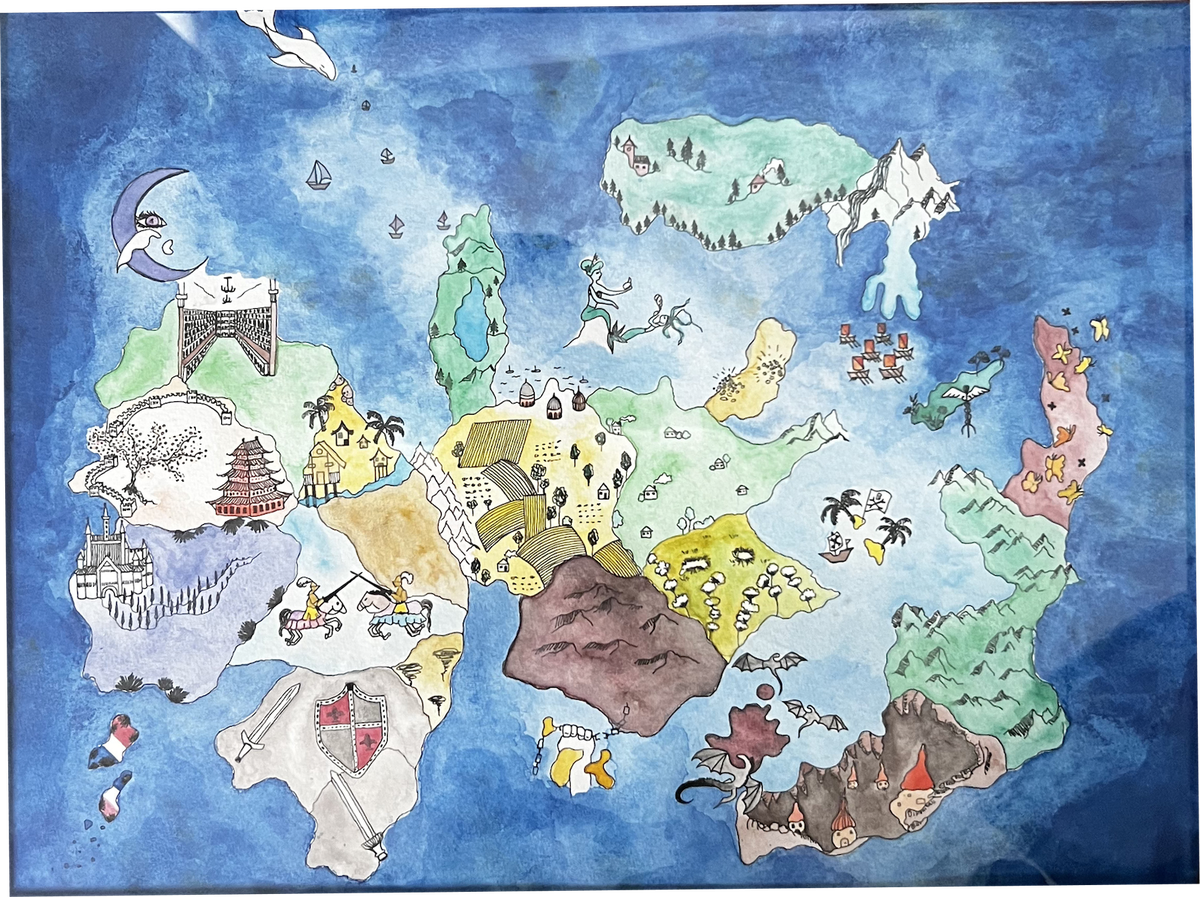
Ny’a first emerged when I was ten, playing with my sister in Canada. It was a wild, untamed place of giant boulders, dark lakes, whispering trees, and endless adventure. Back then it had no name — just “the in-between world.” Not quite Earth, not quite something fully-fledged. But to me, it felt like home.
Over the next twenty years, I kept adding to it. The soft edges of childhood sharpened into danger and mystery; the shadows deepened; the world grew darker and more alluring.
But it wasn’t until 2020 that I began shaping Ny’a into a coherent, fully realised world — complete with history, geography, and those inevitable rules.
Going Beyond the Map
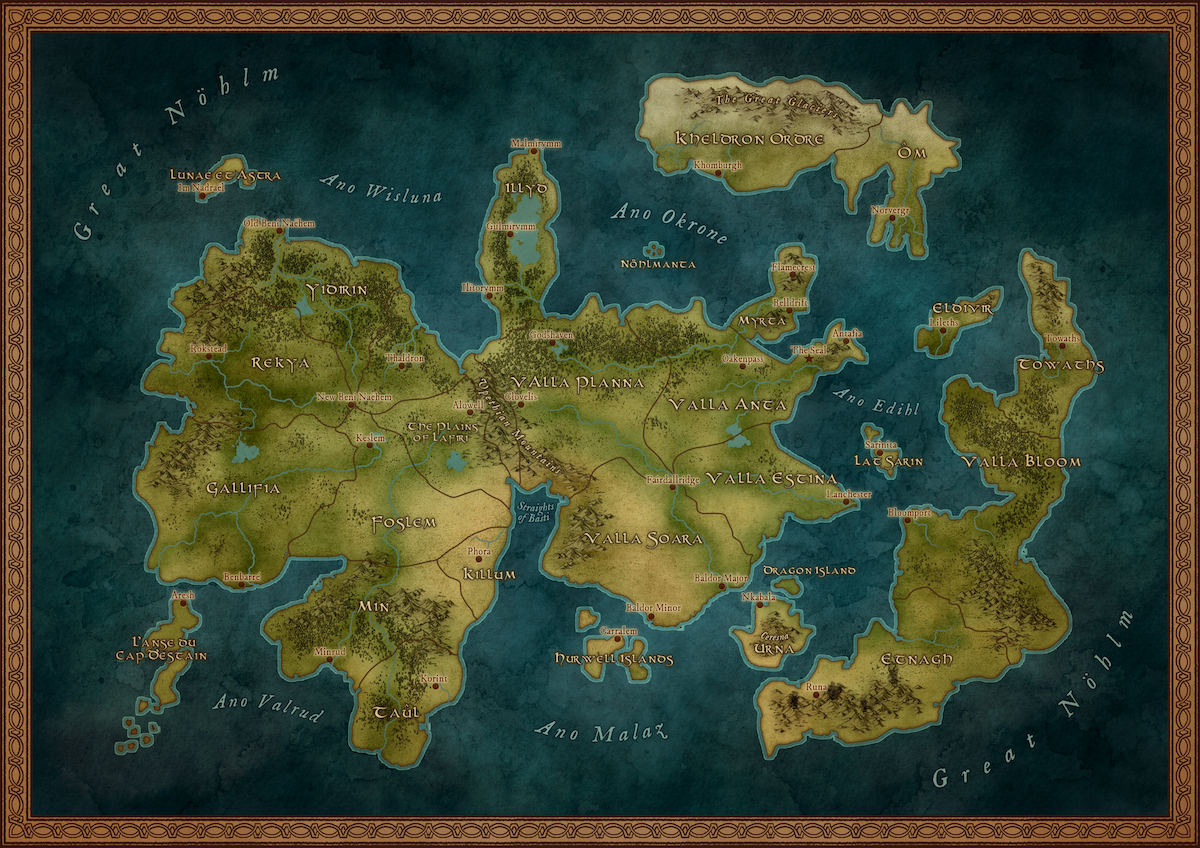
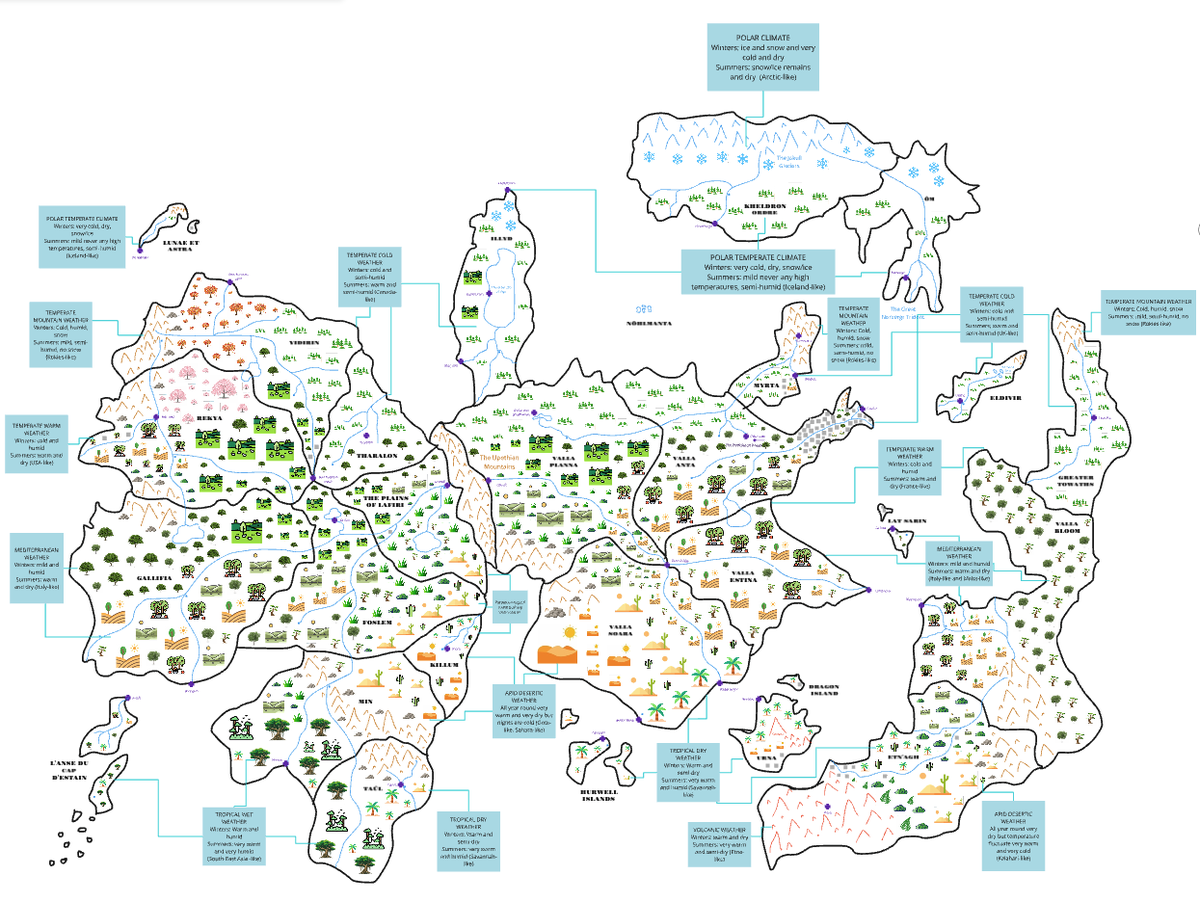
The map of Ny’a started as a free-flowing sketch, just shapes and coastlines. I already knew the broad sweep of its history, so geography quickly followed. After a few iterations, the continent took on the form it has today.
That map has lived many lives and versions since. I’ve been lucky to work with talented artists who brought it to life far more beautifully than my early doodles ever could.
But a map alone doesn’t make a world. It’s only the first layer. To truly understand Ny’a, I had to go deeper. Much deeper…
Systems and Structure
When the pandemic hit in 2020, I suddenly found myself with no commute and hours of unexpected time (how I miss that!). I decided it was finally time: I would stop writing scraps and snippets, and truly begin In-Between.
The story flowed easily; the world, however, refused to cooperate.
So I binned my first draft and started from scratch.
I bought 30 Days of Worldbuilding — a brilliant resource — and began asking questions I’d never considered before:
- Where are my water sources, and do nations fight over them?
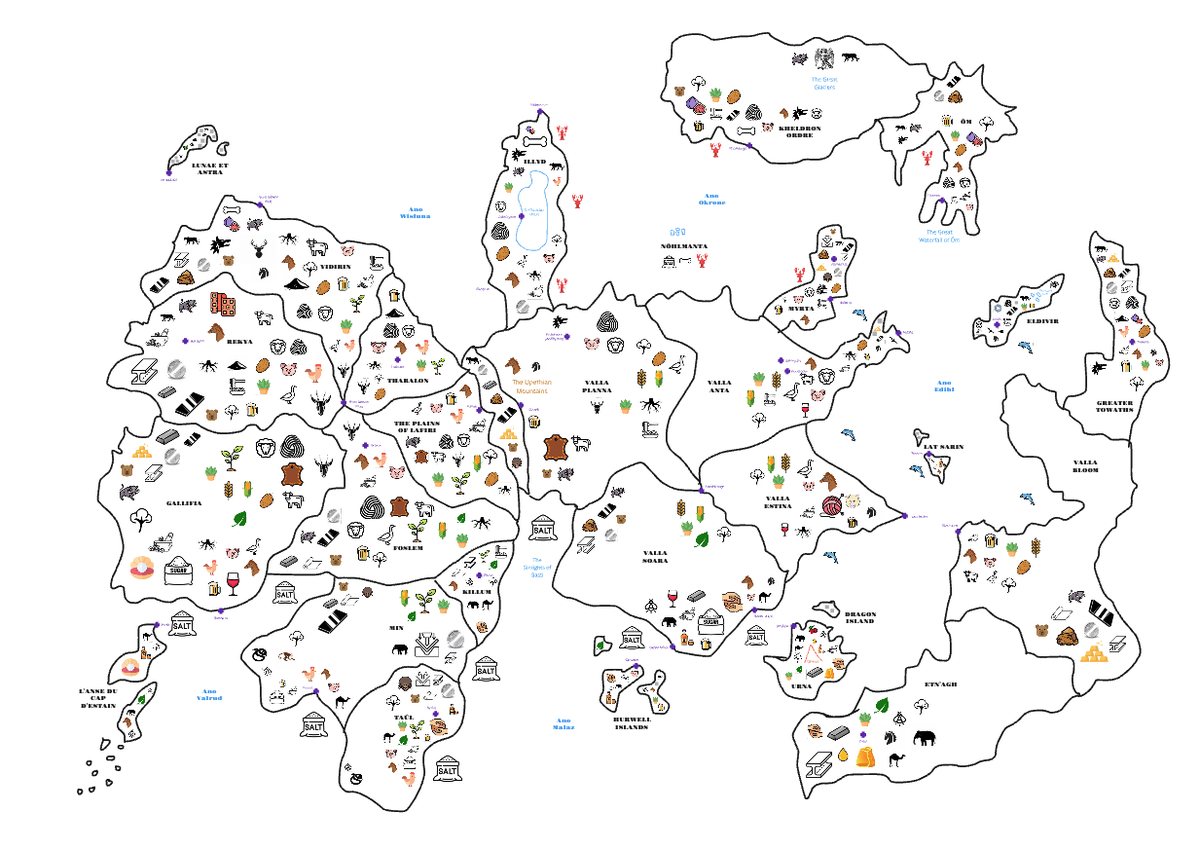
- What resources shape each country’s power and trade?
- How has geography dictated politics, war, and faith?
The list went on and on.
I wrote everything by hand, without a digital backup (rookie mistake). The result? Dozens of filled notebooks in handwriting only ants could read. Eventually, I had to transcribe it all, make sense of contradictions, and turn chaos into something usable. It was painful. It took months.
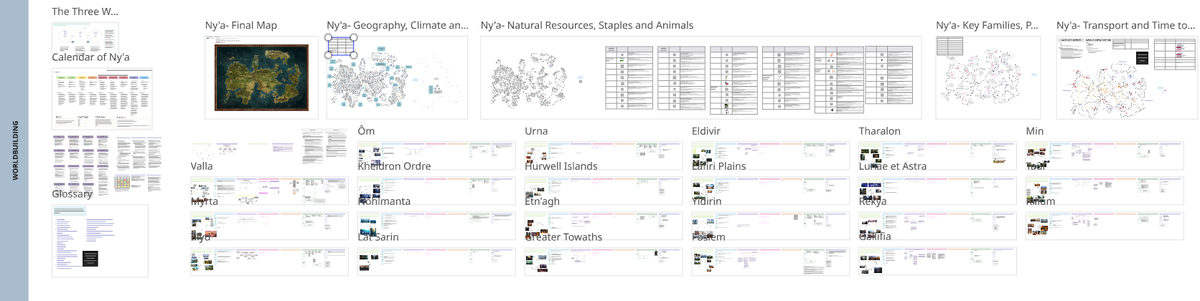
After repeating the same mistake once more (yes, again on paper), I finally gave in and moved everything to Miro.
A Digital Revelation
As a consultant, I’d already mastered Miro, an online whiteboard. Suddenly, it became my creative canvas. I built the entire In-Between world there. Piece by piece, Ny’a came alive.
It took a full year to capture it all: three centuries of history (mapped in Aeon Timeline), layered with politics, magic systems (I will cover magic systems in a different blog post), flora, fauna, architecture, education, and military structures.
By the end, I had twenty-two fully developed countries, each with its own geography, culture, economy, and unique soul.
When Enough Is Enough
You might think I celebrated. I didn’t — I panicked.
How was I supposed to fit all this into my saga?
The answer came quickly:
The reader doesn’t need to know everything.
But the writer does.
Knowing the depth gives every page weight, even if only a fraction ever appears on the surface.
If you’d like me to share practical tips on worldbuilding, or a closer look at Ny’a’s history, its species, or its magic system, let me know in the comments below. I’d love to hear what fascinates you most about creating new worlds.
Comments
Leave a comment
